A massive gold deposit hidden deep beneath China’s Hunan province has just been uncovered, shaking up the global mining scene. Backed by cutting-edge tech and stunning figures, this find could shift economic and geopolitical balances.

Old Gold Mine Underground. Credits: Shutterstock/Mishainik | The Daily Galaxy --Great Discoveries Channel
In central China, geologists have identified one of the largest known gold deposits in recent history. Located in Pingjiang County, Hunan Province, the site contains more than 1,000 metric tons of gold—an amount valued at approximately €78 billion or 600 billion yuan.
According to the Hunan Geological Bureau, over 40 gold veins have been confirmed at the Wangu gold field, with 300 tons already verified within 2,000 meters of depth. Drilling at 3,000 meters revealed additional reserves, pushing the estimate well beyond initial expectations.
Geologist Chen Rulin, part of the surveying team, noted that many core samples showed visible traces of gold, which is uncommon in modern prospecting. Some ores held up to 138 grams per ton, a remarkably high concentration by industry standards.
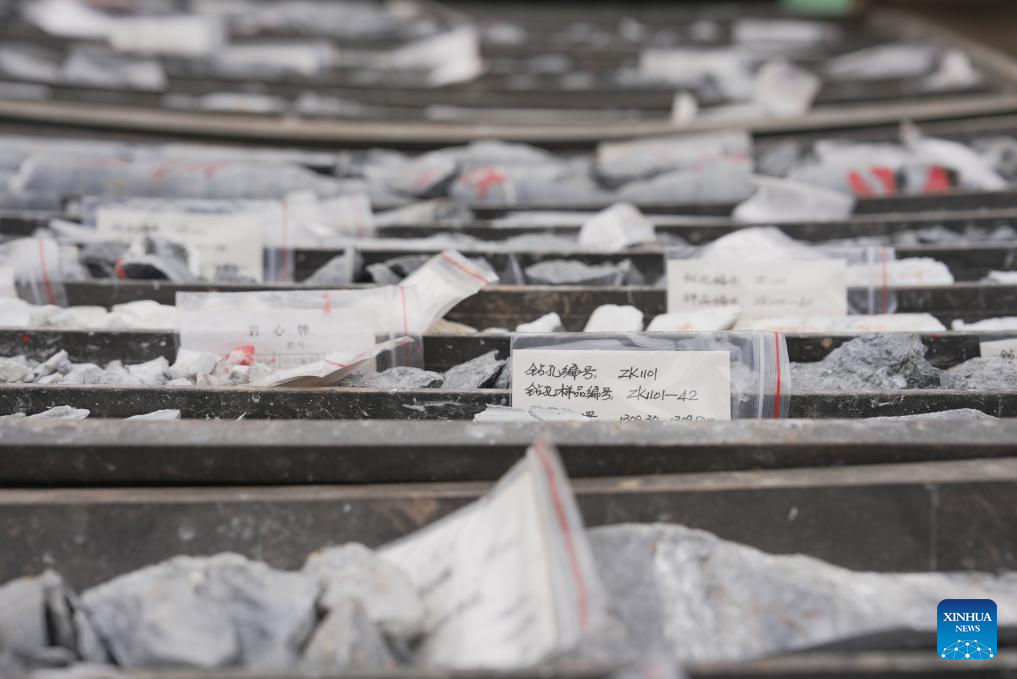 This photo shows rock samples at the Wangu gold field in Pingjiang County, central China’s Hunan Province. Credits: Xinhua/Dai Bin
Technology Beneath the Breakthrough
The scale and depth of this deposit were uncovered thanks to 3D geological modeling, deep-core drilling, and geophysical imaging. These tools allowed scientists to visualize subsurface formations and pinpoint areas rich in gold.
Liu Yongjun, deputy director of the Hunan Geological Bureau, emphasized the critical role of this technology in identifying the reserve. The team also found potential in areas surrounding the core site, suggesting the deposit may be larger than reported.
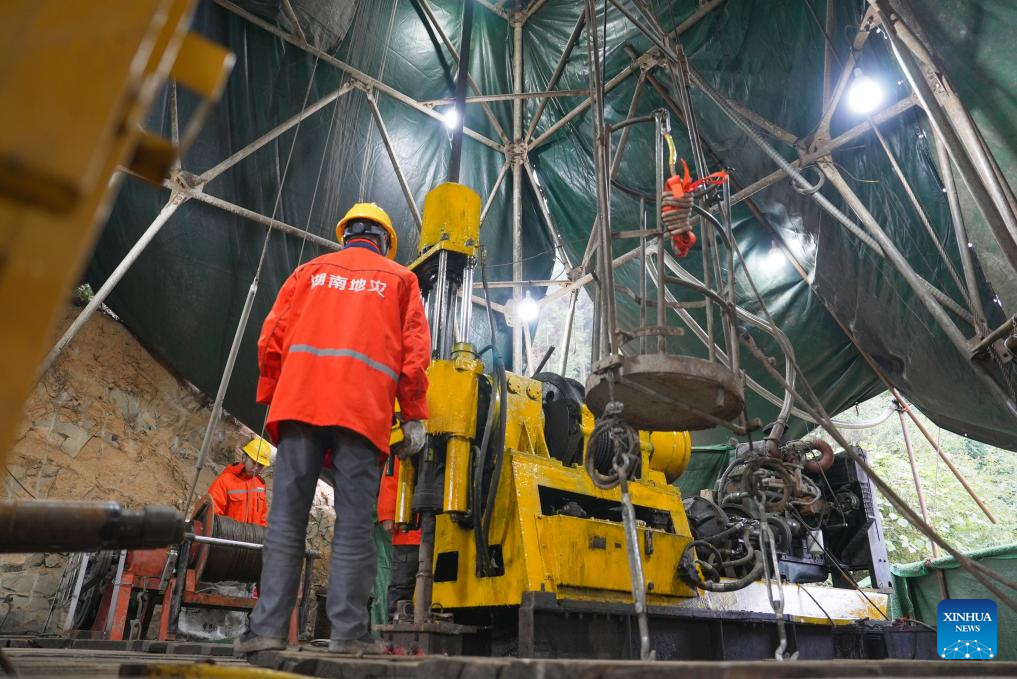 Technicians at the Wangu gold field in Pingjiang County, central China’s Hunan Province. Credits: Xinhua/Dai Bin
The operation reflects a growing shift in the mining industry toward deep-resource exploration powered by high-precision methods—especially as easily accessible surface reserves dwindle worldwide.
Economic Weight of the Discovery
This find could transform Hunan Province into a major mining center. With the potential to attract significant foreign and domestic investment, the site is expected to generate jobs across multiple sectors, including logistics, transportation, and processing.
Infrastructure development is already being discussed to support long-term extraction. Roads, rail links, and energy networks may see upgrades as the area prepares for large-scale operations.
China, already the world’s top gold producer, mined 375 tons in 2023 according to the World Gold Council. The Wangu reserve could substantially raise output, expanding the country’s influence over global supply chains and gold pricing.
Environmental Challenges on the Horizon
Extracting gold from depths beyond 3,000 meters raises serious environmental concerns. Potential risks include water contamination, land disruption, and carbon emissions from industrial equipment.
Though China has adopted stricter environmental regulations under its Green Mineinitiative, large-scale extraction of this magnitude may test those policies. Environmental groups and researchers are calling for comprehensive impact assessments before development proceeds.
How these issues are handled could shape future policy around deep-earth mining, especially as more countries look underground for critical resources.
The Bureau Behind the Find
The discovery comes from the relatively low-profile Hunan Geological Bureau, which has a limited presence in peer-reviewed science. According to Nature, the bureau has published minimal research over the past year, mostly in chemistry, with no international partnerships.
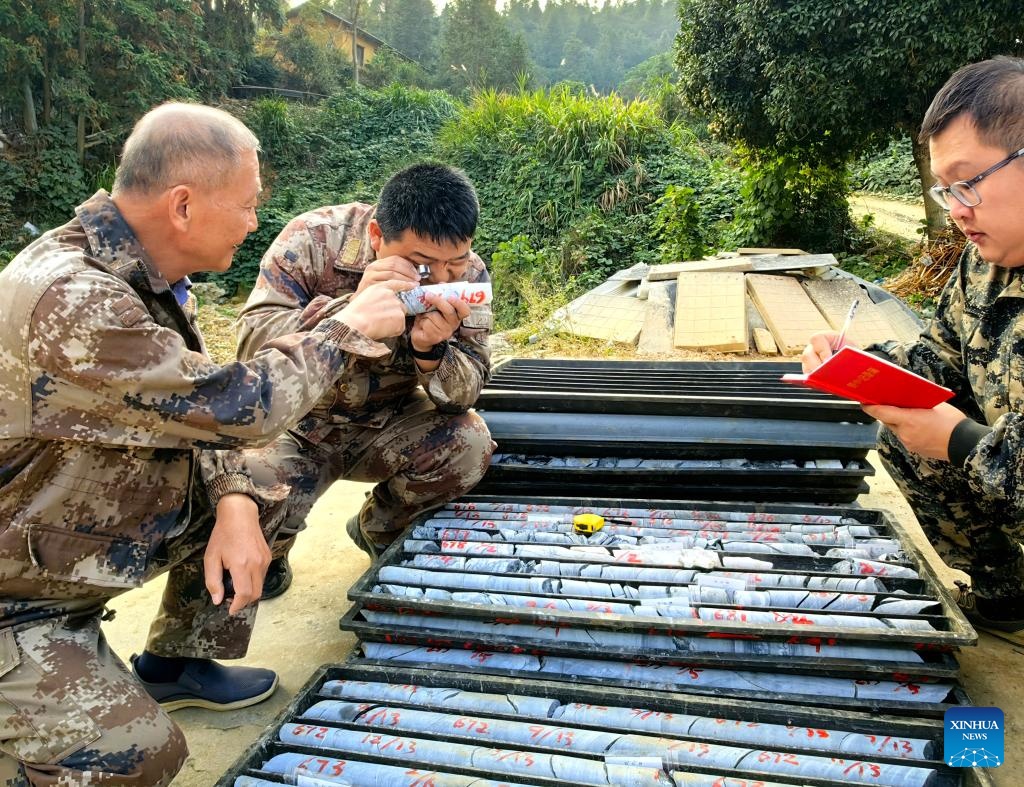 Technicians of Hunan Province Geological Disaster Survey and Monitoring Institute check rock samples at the Wangu gold field in Pingjiang County, central China’s Hunan Province. Credits: Xinhua/Su Xiaozhou
Still, its practical achievements in exploration—and its use of cutting-edge techniques—underscore the growing capabilities of regional institutions in driving major mineral discoveries.
A Shift in the Global Gold Equation
Global gold demand remains high due to market volatility, inflation concerns, and central bank stockpiling. While the Wangu deposit won’t hit the market immediately, it introduces a new variable that could influence future pricing and reserves strategies.
This discovery also highlights China’s deepening investment in high-tech mining, and raises questions about what other untapped resources may lie beneath the surface both in Hunan and beyond.
As exploration continues, early indications suggest there could be even more gold in the region. Whether this transforms China’s long-term mining strategy or remains an exceptional case, the Wangu gold field has already made a global impact.